
Japan Study Cost from Nepal 2027: Complete Guide for Nepali Students
Japan Study Cost from Nepal 2027: Everything Nepali Students Need to Know
Japan has become one of the most popular study destinations for Nepali students. Every year, thousands of students choose Japan because of its world-class education system, affordable tuition compared to many Western countries, excellent safety, and the opportunity to work part-time while studying.
One of the first questions every student asks is:
"How much does it cost to study in Japan from Nepal?"
The answer depends on several factors, including the city you choose, the language school or college, your accommodation, and your lifestyle. This guide explains the major expenses you should expect before and after arriving in Japan.
Why Choose Japan for Higher Education?
Japan offers a unique combination of quality education and practical experience. International students benefit from modern facilities, advanced technology, a safe environment, and opportunities to develop valuable language and professional skills.
Some of the key advantages include:
Globally respected education system
Safe and clean cities
Opportunity to work part-time while studying (subject to applicable regulations)
Strong career opportunities after graduation
Rich cultural experience
Modern transportation and infrastructure
Total Cost of Studying in Japan from Nepal
The overall cost varies depending on the institution and the city where you study.
Your total expenses generally include:
Language school or university tuition
Admission-related fees
Student visa preparation
Airfare
Accommodation
Food
Transportation
Health insurance
Daily living expenses
Proper financial planning before departure can make your study journey much smoother.
1. Tuition Fees
For most Nepali students entering Japan through a Japanese language school, tuition fees typically include:
Admission fee
Enrollment fee
Tuition fee
Facility fee
Student insurance (depending on the institution)
The exact amount varies from school to school.
Always check the official fee structure provided by your selected institution before making any payment.
2. Documentation and Application Expenses in Nepal
Before receiving your Certificate of Eligibility (COE), you may need to prepare several documents.
Common expenses may include:
Passport
Document translation
Notary services
Educational document preparation
Japanese language training
Medical examination (if required)
Other administrative expenses
The exact cost depends on your individual situation.
3. Certificate of Eligibility (COE)
The Certificate of Eligibility (COE) is one of the most important documents for obtaining a Japanese student visa.
Your educational institution in Japan usually submits the COE application to the Japanese immigration authorities on your behalf.
Providing accurate and complete documents helps reduce delays in the application process.
4. Student Visa
After receiving the COE, students apply for a Japanese student visa.
Make sure all submitted documents are accurate and consistent. Missing or incorrect information may delay the visa process.
5. Airfare
Flight prices between Nepal and Japan change depending on:
Travel season
Airline
Booking date
Destination airport
Booking early often provides more choices and, in many cases, better prices.
6. Accommodation Costs
Accommodation is usually one of the biggest monthly expenses.
Popular options include:
Student dormitories
Shared apartments
Private apartments
Rent varies depending on the city.
Major cities like Tokyo generally have higher housing costs than many regional cities.
7. Food Expenses
Students can manage their food budget by:
Cooking at home
Buying groceries from supermarkets
Using student cafeterias
Shopping during discount hours
Preparing meals yourself can significantly reduce monthly expenses.
8. Transportation Costs
Japan has one of the world's most efficient public transportation systems.
Students commonly use:
Trains
Buses
Bicycles
Many students purchase commuter passes to reduce transportation costs.
9. Health Insurance
International students are generally required to enroll in Japan's public health insurance system according to local regulations.
This helps reduce medical expenses when visiting hospitals or clinics.
10. Personal Living Expenses
Additional monthly expenses may include:
Mobile phone
Internet
Study materials
Clothing
Entertainment
Household supplies
These costs depend on your lifestyle.
Can Students Work Part-Time in Japan?
Many international students work part-time while studying after obtaining the required permission under Japanese regulations.
Part-time work can help students manage daily living expenses, but academic success should always remain the first priority.
Students should always follow the latest immigration and employment rules.
How to Reduce Your Study Costs
Here are practical ways to manage your budget:
Choose affordable accommodation.
Cook your own meals.
Use student discounts whenever available.
Plan your monthly expenses.
Avoid unnecessary spending.
Purchase second-hand furniture when possible.
Use bicycles for short-distance travel.
Small savings each month can make a significant difference over the course of your studies.
Common Mistakes Students Make
Many students increase their expenses because they:
Choose accommodation without comparing prices.
Spend too much during the first few months.
Fail to prepare a monthly budget.
Ignore hidden living costs.
Delay important paperwork.
Planning ahead helps avoid these problems.
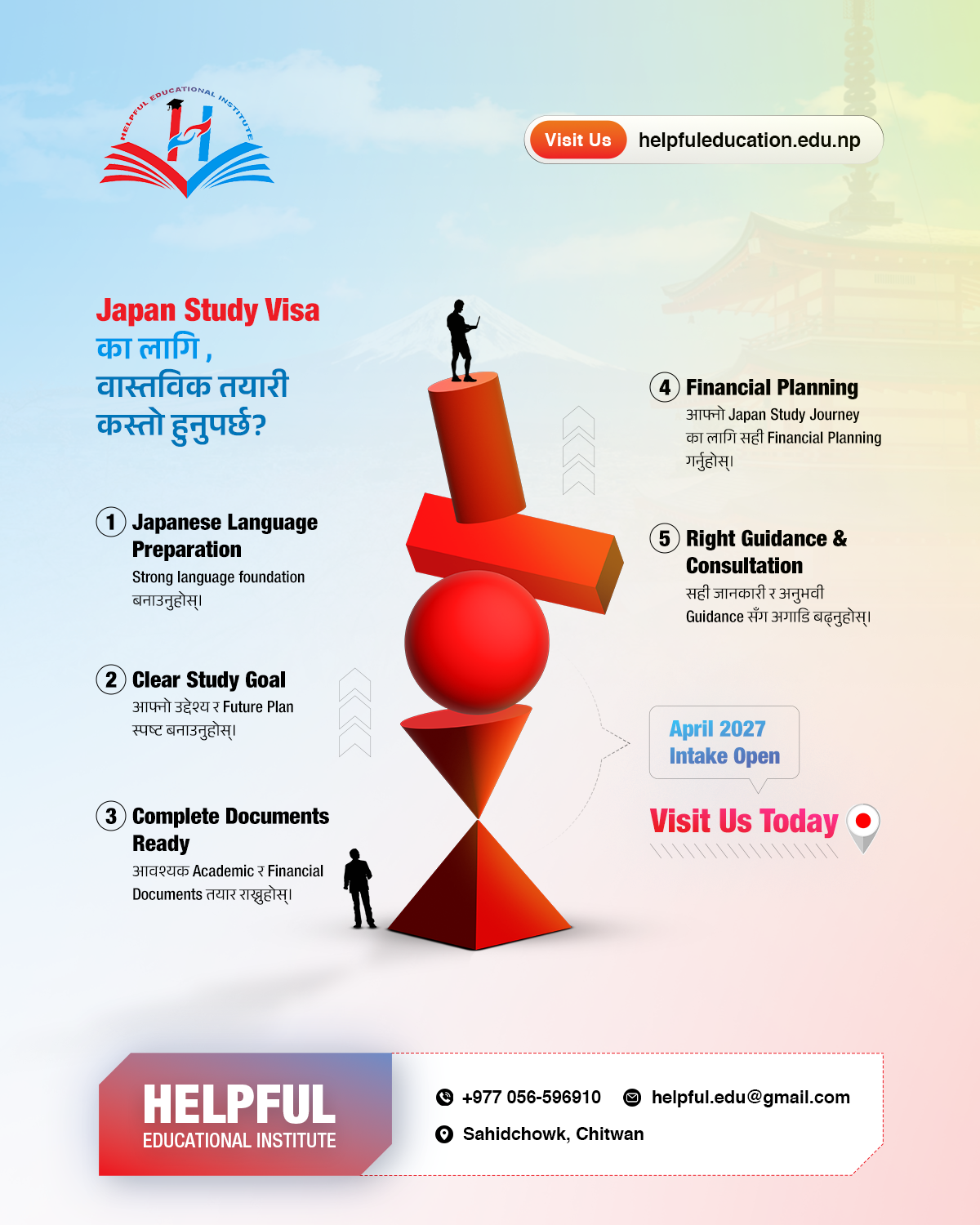
How Helpful Educational Institute Supports Nepali Students
Planning to study in Japan involves much more than submitting an application.
Helpful Educational Institute provides guidance throughout the process, including:
Career counseling
School selection
Document preparation
COE documentation support
Visa guidance
Japanese language preparation
Pre-departure orientation
Receiving professional guidance can help students complete the application process more confidently and efficiently.
Final Thoughts
Studying in Japan is an investment in your future. With proper planning, accurate documentation, and the right guidance, Nepali students can successfully begin their educational journey in Japan.
Before making any decisions, compare schools, understand your expected expenses, and prepare your finances carefully.
A well-planned budget allows you to focus on what matters most—your education and future career.
Frequently Asked Questions (FAQs)
How much does it cost to study in Japan from Nepal?
The total cost depends on the school, city, accommodation, and personal lifestyle.
Is Japan affordable for Nepali students?
Many students find Japan manageable through careful budgeting and, where permitted, part-time work.
Which city is cheaper for students?
Living expenses generally vary by city, with Tokyo often being more expensive than many regional cities.
Can Nepali students work while studying?
Eligible international students may work part-time after obtaining the appropriate permission and following Japanese regulations.
Is studying in Japan worth it?
Japan offers quality education, international exposure, valuable work experience, and strong career opportunities, making it an attractive destination for many Nepali students.


